
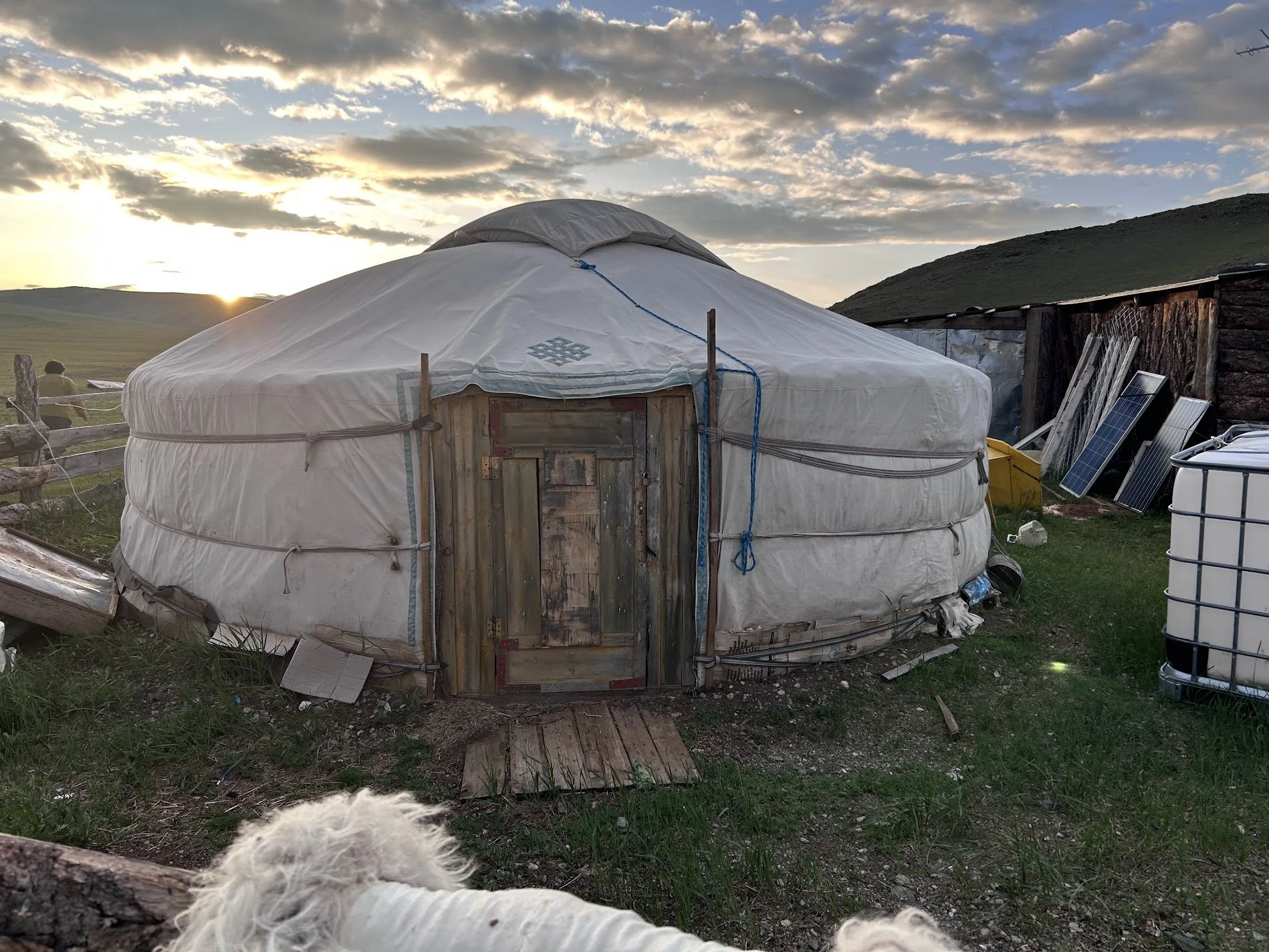
A traditional Mongolian ger, setup at our field site for cooking, storage, and lab analysis. Photo Credit: Jay Bateman.
Gigi Lamb
July 8, 2026
One particularly chilly evening, I sat alone in our team’s kitchen ger, enjoying the warmth of the stove and trying to find something to pass the time. Camp life could be quiet after dark, so I was secretly hoping something unexpected might happen. Sure enough, the silence was broken when Jerry walked in with a park ranger for an impromptu interview.
Just at that moment, Tuvshin, our translator, walked into the ger and graciously stepped in to help me understand the exchange. What started as an ordinary evening quickly turned into one of the most memorable conversations of the trip.
The conversation wandered in all directions, but one story stuck with me. The ranger described playing as a child. Just as children in the West often play “house,” children in Mongolia play “ger.” They would build the circular outline of a ger using rocks, arrange flat stones as plates, and gather grass to serve as food. It sounded surprisingly familiar, despite being rooted in a completely different way of life.
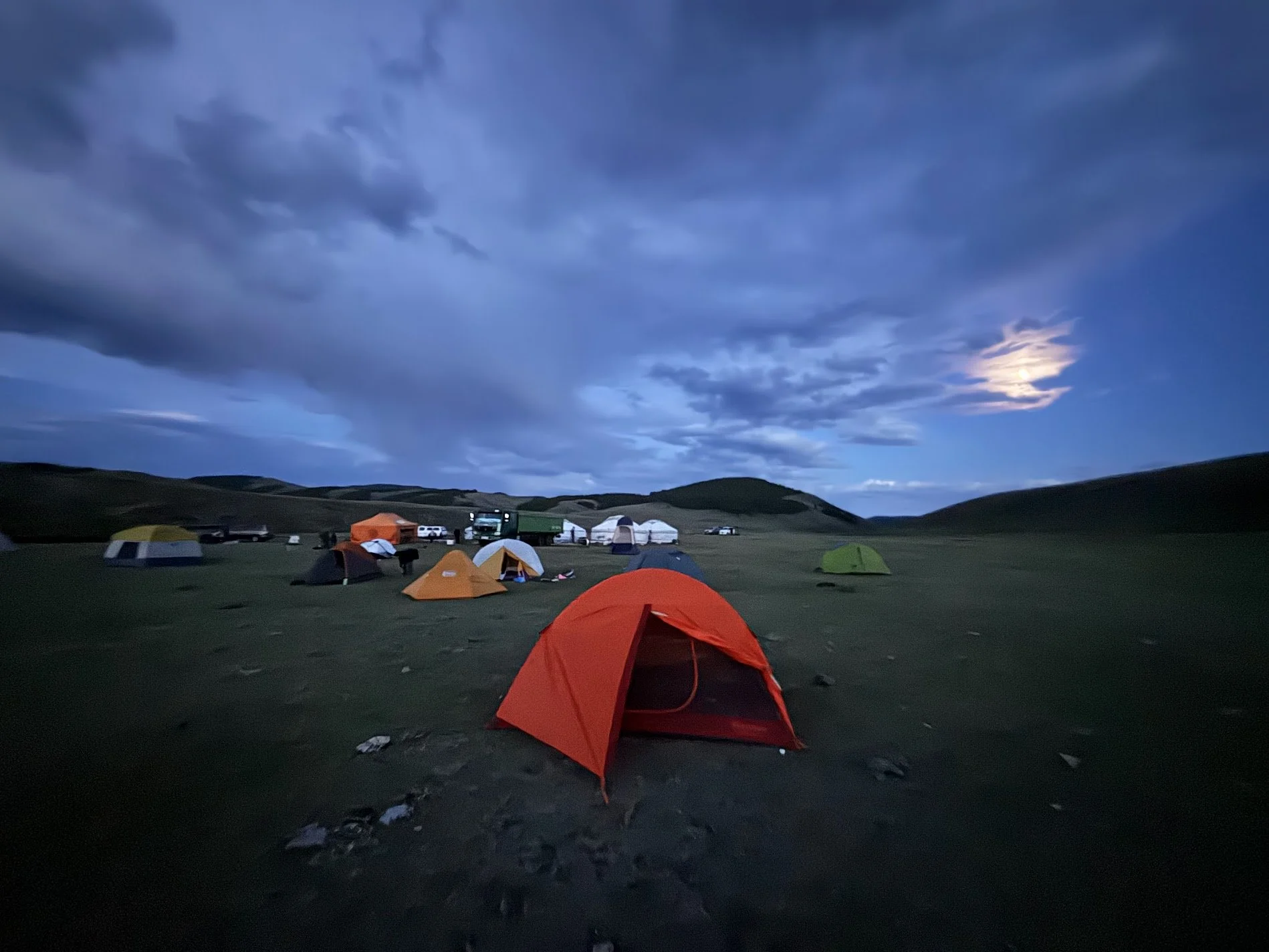
Night falls on the NOMAD Science camp. Photo Credit: Molly Brooks-Jennings.
Of course, every imaginary household needed someone in charge. According to Tuvshin, every child wanted to be the head of the ger, so they could boss everyone else around. Whether that was a universal childhood experience—or just Tuvshin admitting what he liked to do—I'll let you decide.
What really stayed with me, though, was the fact that the stones from his childhood ger are still visible today, more than 50 years later. Something as simple as a children's game had left a physical mark on the landscape, quietly preserved through time.
It made me think about how places are not just built to be used once and forgotten. Sites are often created with the expectation that people will return to them, whether they are burial mounds, ritual structures, or everyday spaces of memory. The people who built these places were not only shaping the landscape for their present lives; they were creating spaces that could be revisited, remembered, and given meaning by future generations.