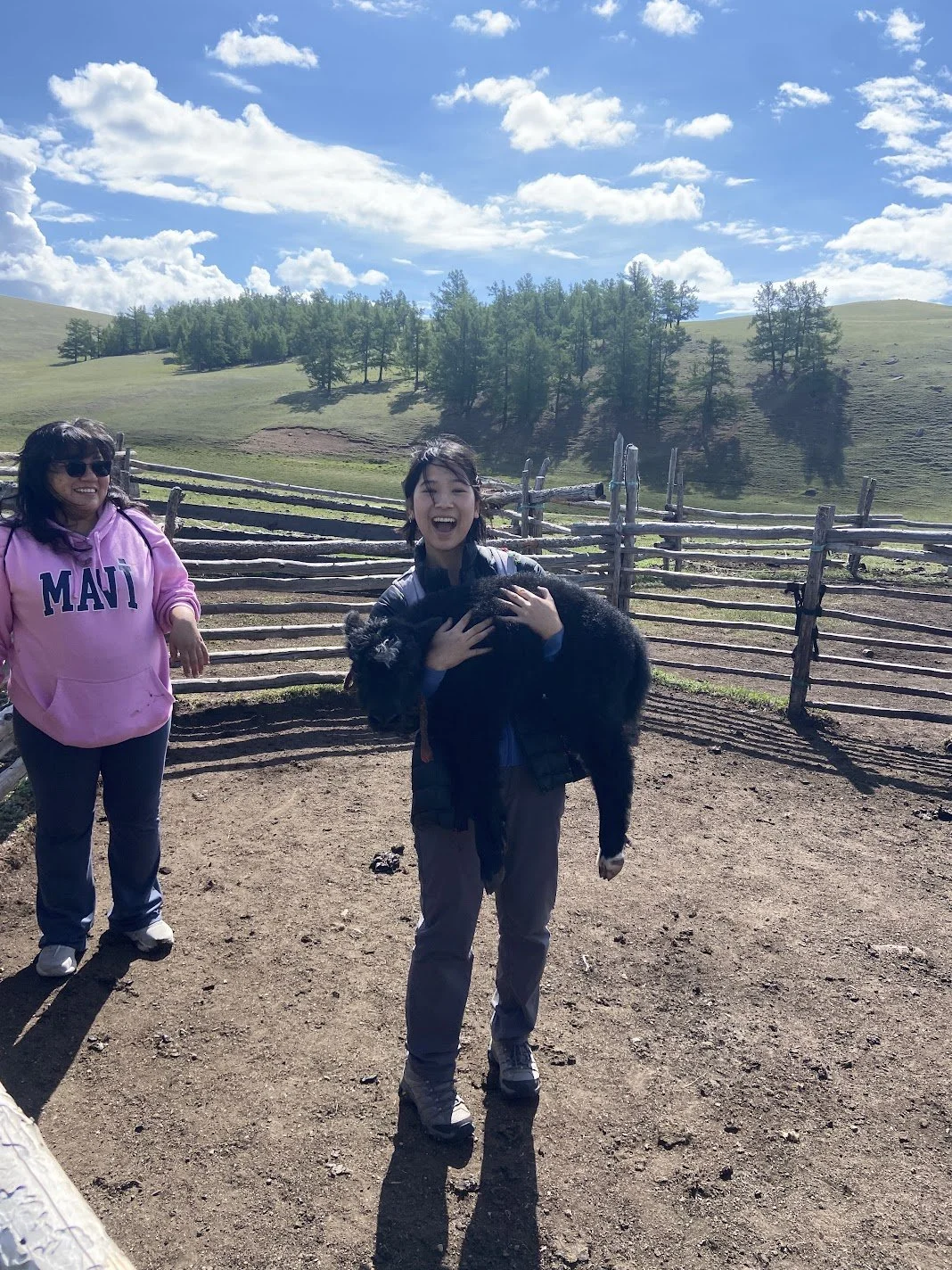
NOMAD student Sarah Wolfe holds a baby yak during a ger visit. Photo Credit: Miranda Selin.
Neon Liebson
June 27, 2026
A field season with NOMAD Science gave me not only the incredible opportunity to gain archaeological experience, but to also learn about Mongolian culture. In our first few days in the field, the team visited the ger of a nearby family. Before heading in, we learned from our Mongolian collaborators about ger etiquette. Visitors typically enter and dwell on the left side of the ger, avoiding the right side, which is reserved for family. The two pillars in the center mark a sacred space, which is taboo to step through. Additionally, it is respectful to step over the doorway and avoid stepping on top of it.
The family in the ger was extremely welcoming. When we arrived, they prepared a wide variety of traditional foods for us—yak milk, tea, yogurt, boar fat, and urum (a yak-based clotted cream) with bread and sugar. The family talked about their life stories and experiences. For instance, the mother of the family had received a medal from the Mongolian government for having four or more children. A little later, our hosts also let us visit their baby yaks. In Mongolia’s sparsely-populated countryside, I learned, this kind of hospitality is central to the pastoral way of life, and repaid with small gifts—and the expectation that the visitor will do the same for other travelers when they are home. I am grateful for their kindness and generosity.
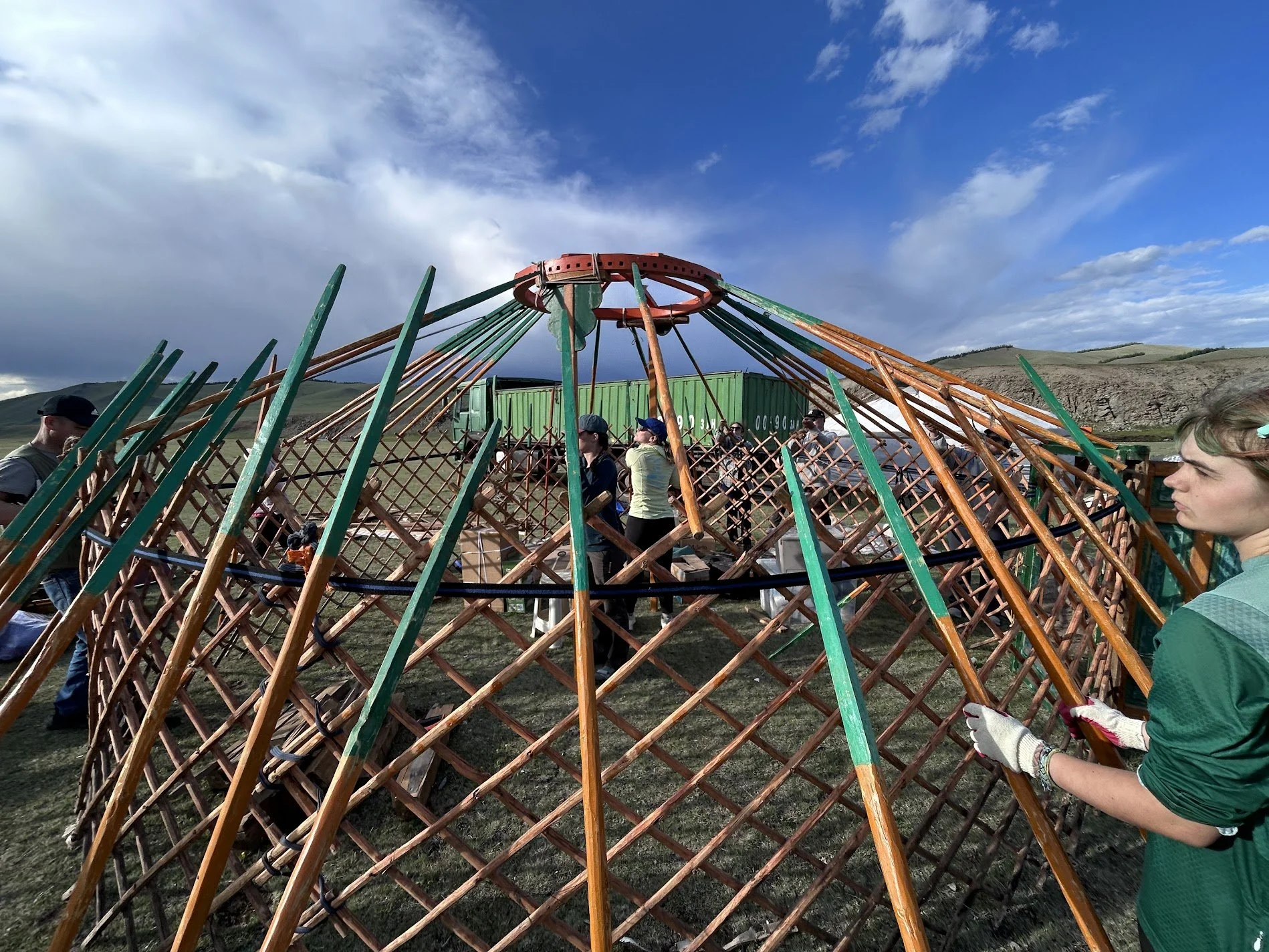
The team works together to construct our own ger for cooking, storage, and lab analysis at camp. Photo Credit: Jay Bateman.
It was also the time for the family's seasonal move. In Mongolia, most pastoralists move their gers and herds four times, between summer, fall, winter, and spring camps in the same region. We were happy to lend a hand, and assisted our hosts in taking down the gers and loading them into their trucks. This gave further insight into the experiences of a nomadic lifestyle.
Visiting our neighbor’s ger was a beautiful and memorable experience. I learned more about Mongolian culture and daily life. In the future I hope to visit Mongolia again and help with learning and conserving Mongolia’s cultural heritage.