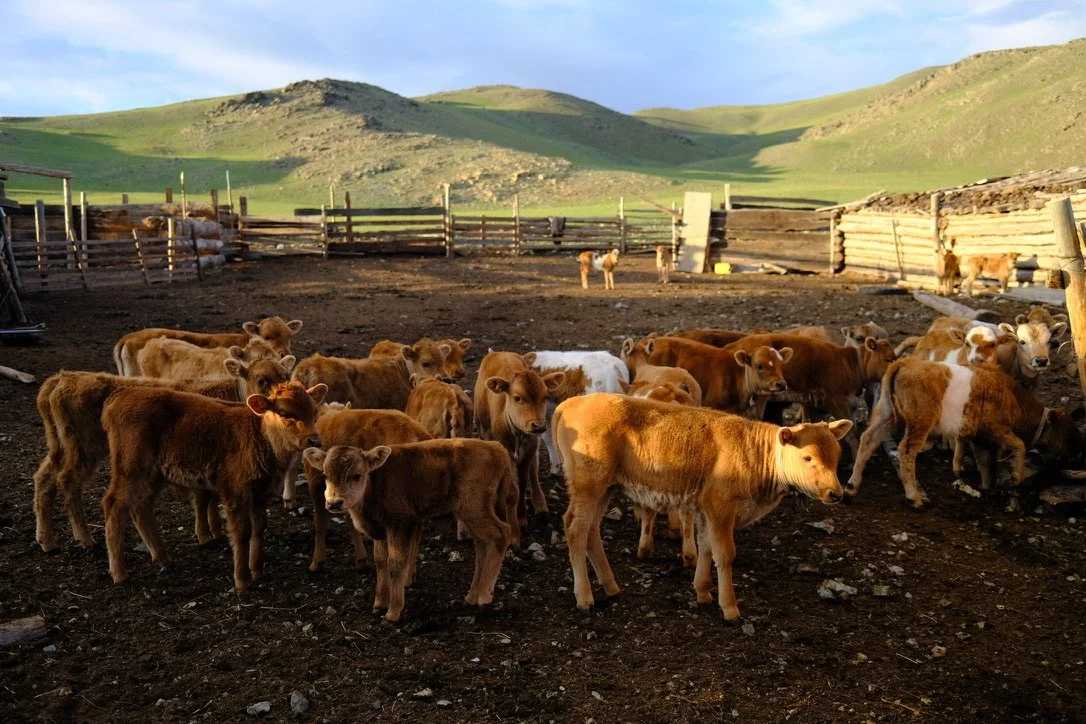
A group of calves await their mothers during a morning milking. Photo Credit: Sarah Wolfe.
Sarah Wolfe
July 12, 2026
I was born in a part of the world known for lactose intolerance. So when I arrived in Mongolia, I was struck by the ever-presence of milk products. From herds of baby yaks, cows, and sheep, to the decadent spreads of clotted cream (urum), yogurt, and milk teas that preceded every Mongolian welcome—milk was everywhere.
Speaking with my Mongolian friends, I saw first and foremost the effort that it took to provide me with such delicacies. This universally-recognized effort is part of why milk products have come to represent trust and goodwill in Mongolian culture. In a proverbial sense, the production of milk products can both take a village and also make one.
With the same air of generosity that we were offered milk goods, we were instructed by our translator to receive the goods in an appropriate way. In Mongolia, you must receive food and drink with both hands. Even if you do not want to eat or drink, you must symbolically touch the offering to your lips, to accept the host’s hospitality. Being a good recipient meant giving back to the family through a show of gratitude. The regulation of hospitality and gift giving through social rules shows that, just as language needs grammar, there is both a proper and improper way to receive milk products.
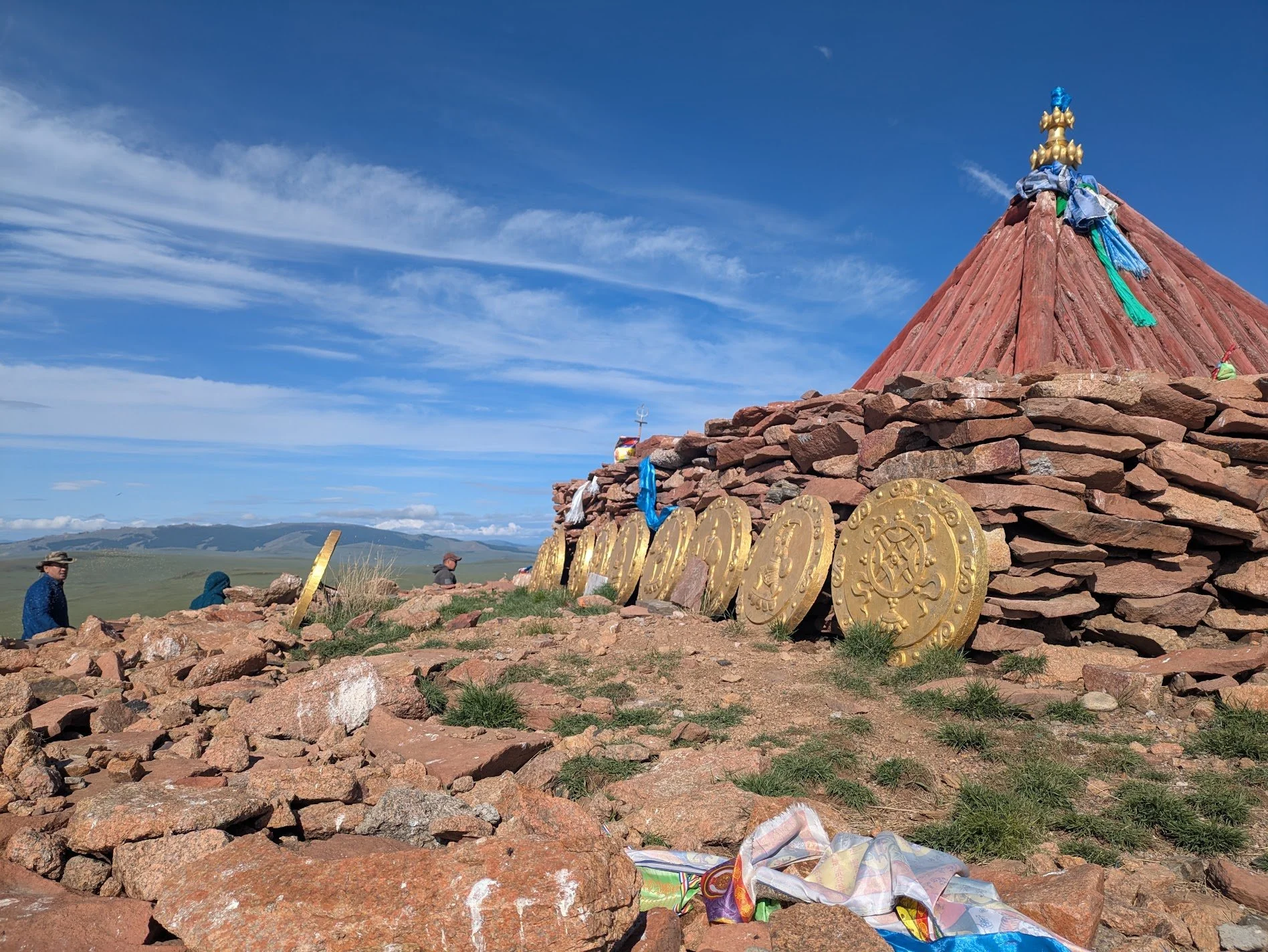
A Mongolian oovo, where milk is often spread by local herders and travelers for good luck. Photo Credit: Peter Carty.
Milk products operate differently in various contexts. Just as milk is offered to strangers and friends, it can be offered at oovos (Shamanic spiritual sites) or at Naadam celebrations, scattered onto the ground to bring good luck. But together, milk’s many uses paint a more cohesive picture when put together. Mongolian ideals of balance, generosity, and humility are traceable wherever milk shows up. A willingness to receive is consistently matched with a drive to give back.
Archaeologists often use food residues on ceramics to learn about anceint diets. If, in my future research, I encounter a piece of pottery with a trace of dairy in it, I will take a moment of pause. After my experience in Mongolia, it will be a practice of both imagination and memory to think through the many meanings of milk in the past, as in the present.