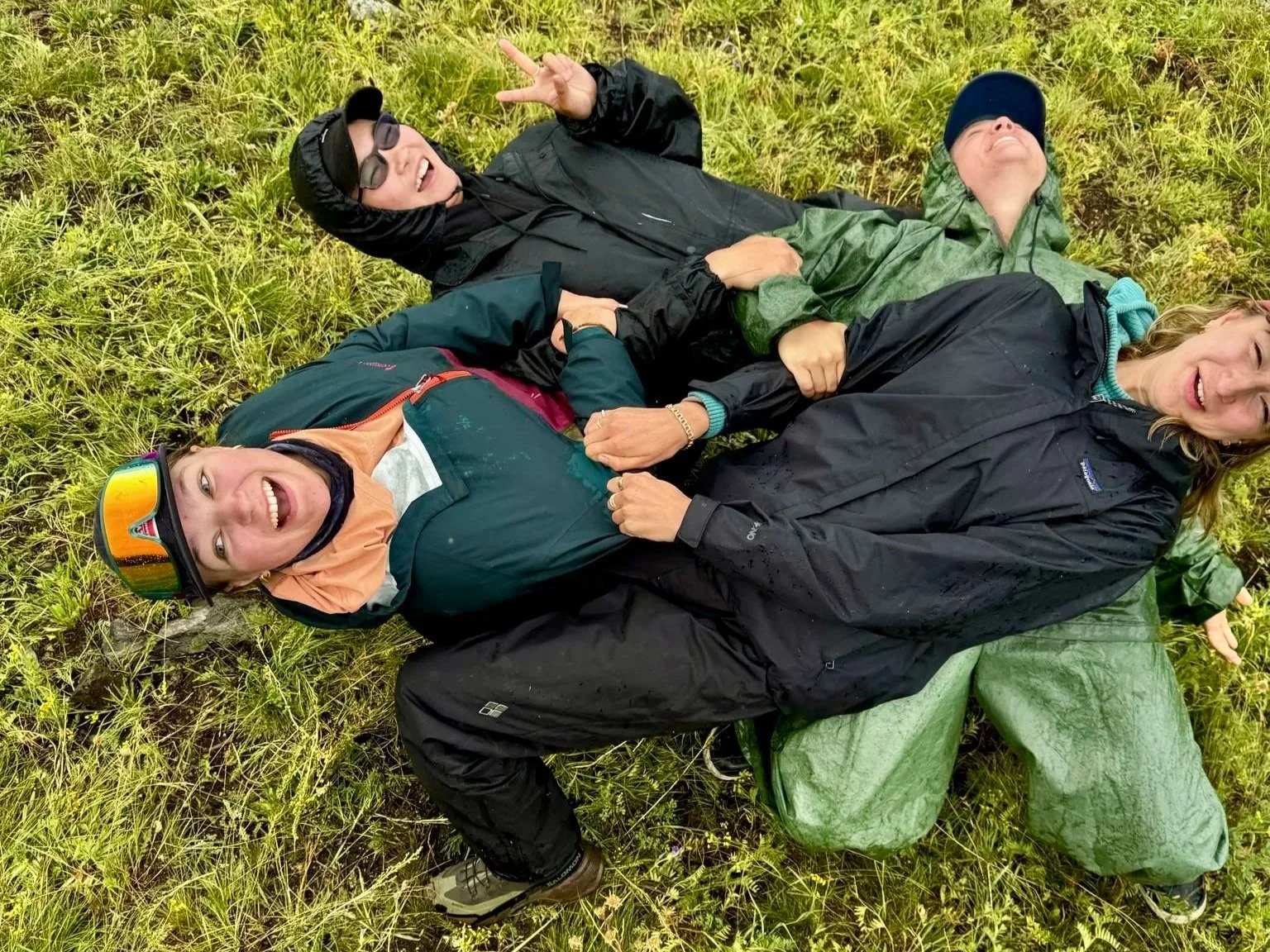
Campbell (left) and the team enjoying an excavation break. Photo Credit: Phoebe Veitch.
Campbell Jenkins
August 6, 2026
Today, I am outgoing and comfortable with strangers, so most people do not realize that for many years I struggled with social anxiety and the weight of invisible expectations. When I was younger, making friends was a struggle. But eventually, I learned how to overcome my anxiety. Once, when I was in the throes of this enigmatic quest for friends, I went to my mother for help. She gave me a valuable piece of advice: ask questions whenever I don't know what to do. I followed that advice rigorously for many years, and it kept working. In Mongolia, where deep cultural divides might have made connection equally difficult, I kept following her advice—and it kept working.
A language barrier seems scary to most people, especially those who have never had to bridge one before. Arriving in Mongolia, I shared this fear, but it was soon quashed. While traveling in Mongolia, or any other part of the world, you are bound to come across people who speak a different language from you, but you can still find ways to make friends. It just may look a little different than what we are used to. We learn to rely heavily on verbal communication, but there are so many other ways to converse. Nearly every step of our Session 2 journey, we communicated with rural shop workers, families living in gers, and the park rangers who so graciously accompanied us to Shar Uul. It is amazing how much one can get across with simple gestures and a warm smile.
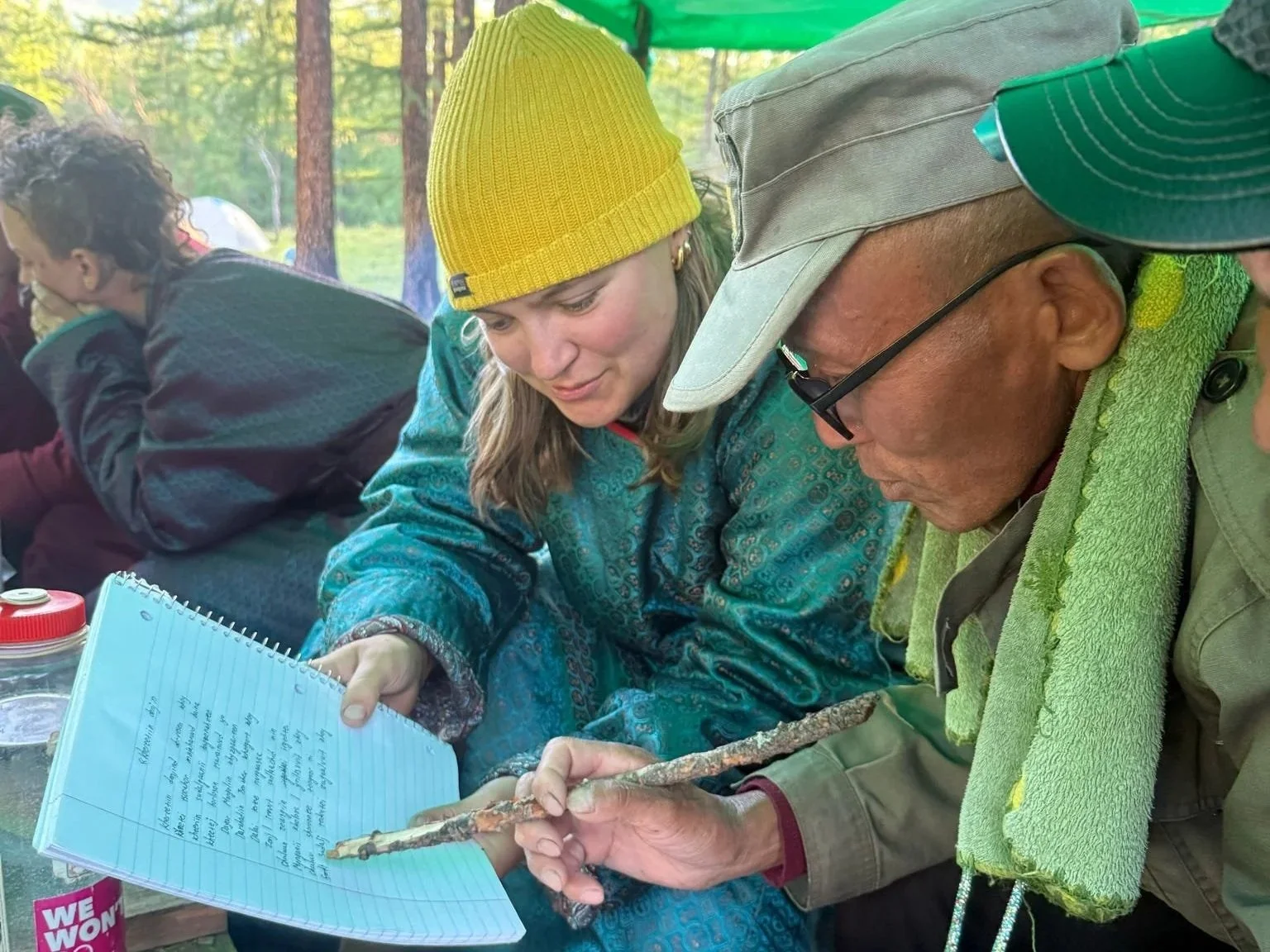
Battogtokh teaches Campbell a traditional Mongolian tune from the Darkhad. Photo Credit: Phoebe Veitch.
One of my goals during my time in the field was to get to know each ranger on some level. I am proud to say that I accomplished that mission. While it was challenging—and little nerve-wracking at first—I forced myself to use the little Mongolian I knew to get the ball rolling. It is truly incredible what a simple sain baina uu? (are you well?) or tany ner khen be? (what is your name?) can do. The effort opens doors to invaluable connections. I don’t think sharing a language is vital, but if you get over the fear of making mistakes or being a burden, learning a little opens up a whole new world of opportunity.
My quest really only started when we were at our base camp in the mountains because we were able to get to know the rangers and Mongolian staff in a more one-on-one setting. The three rangers who stayed at camp were Ganga, Battogtokh, and Balja. The first few days, we were too hesitant, and Mongolians and foreigners largely kept to themselves. But slowly and surely, the walls started to come down. Before long, we were one community.
The two older rangers made it easy to connect. Every evening and every morning you could find Ganga tending the fire with a watchful eye and a caring touch. He always seemed to notice when one of us was in need of a warm fire and he would make sure we were welcome and had the warmest spots. Battogtokh is a bright soul full of curiosity and generosity. Most days he was at the site with us looking through the sieve with a watchful eye or traversing the eroding slope into the river looking for remnants of the past. His evolution from observing to actively assisting on the dig was so wonderful to see because it reaffirmed the importance of the work we were doing. If a local like Battogtokh could see value in scanning the sieve for a rogue lithic then surely our work could be valued.
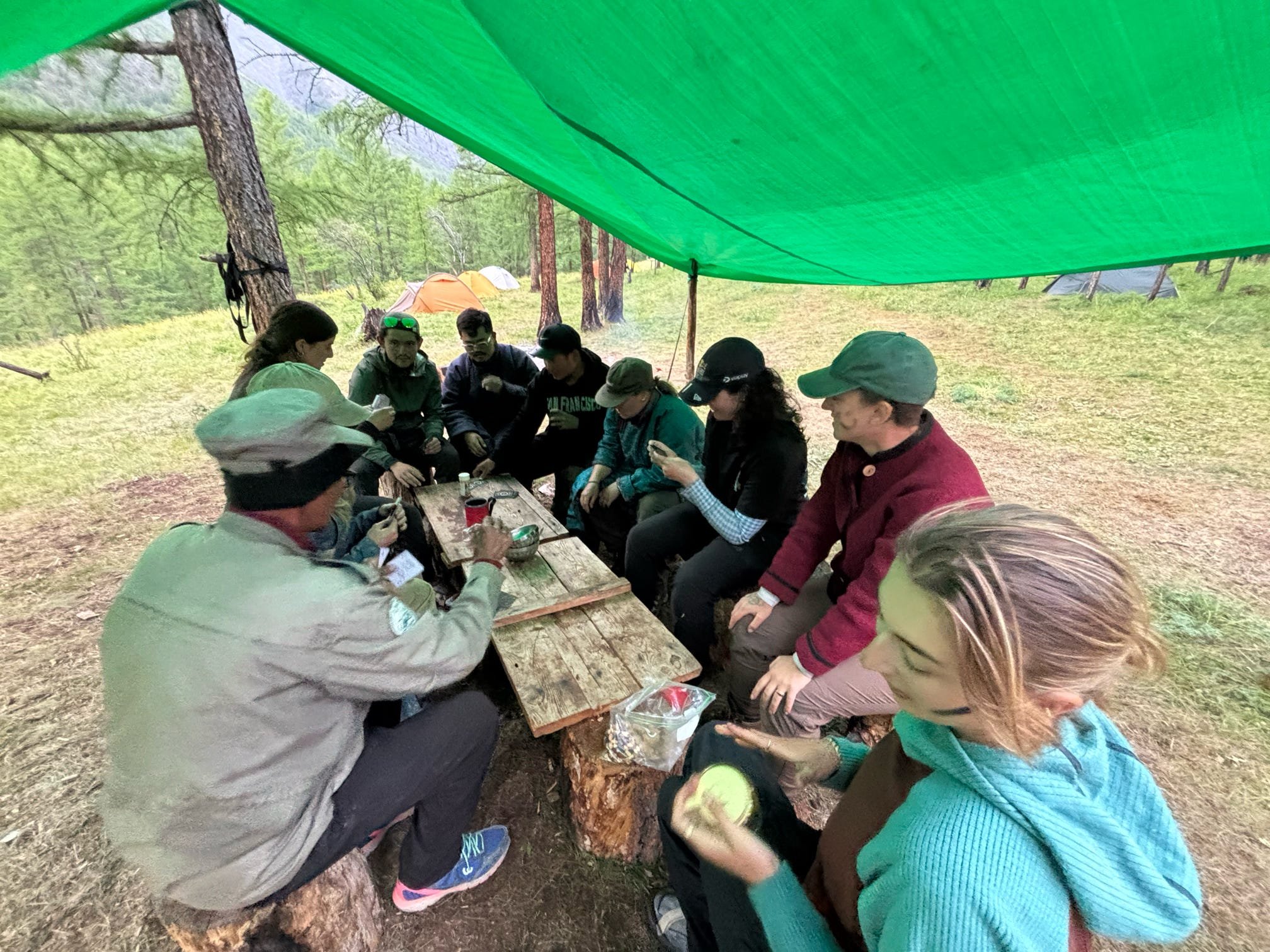
After dinner cards and face painting at our field camp. Photo Credit: Molly Brooks-Jennings.
Balja was much harder to crack. He is a man of few words and likes to keep his thoughts close to his chest. In my effort to get to know Balja I discovered a surefire technique of playing games. Balja is competitive, and loves a challenge. One of our first nights we wrangled him into playing ninja—a game of reflexes and strategy—with us. This was truly the puzzle piece we needed to be able to get to know everyone.
Once we all discovered that games were the easiest way to connect everyone and create our own little community, we went after it. We played games almost every night, usually cards but sometimes other games, like ninja. I loved playing Spoons, because after a long day of work the last thing I wanted to do was use my brain. Spoons brought all of the laughter and camaraderie, with none of the brainpower—it was perfect. Balja was fantastic at Spoons and usually played a couple of rounds with us when he wasn’t taking care of the horses.
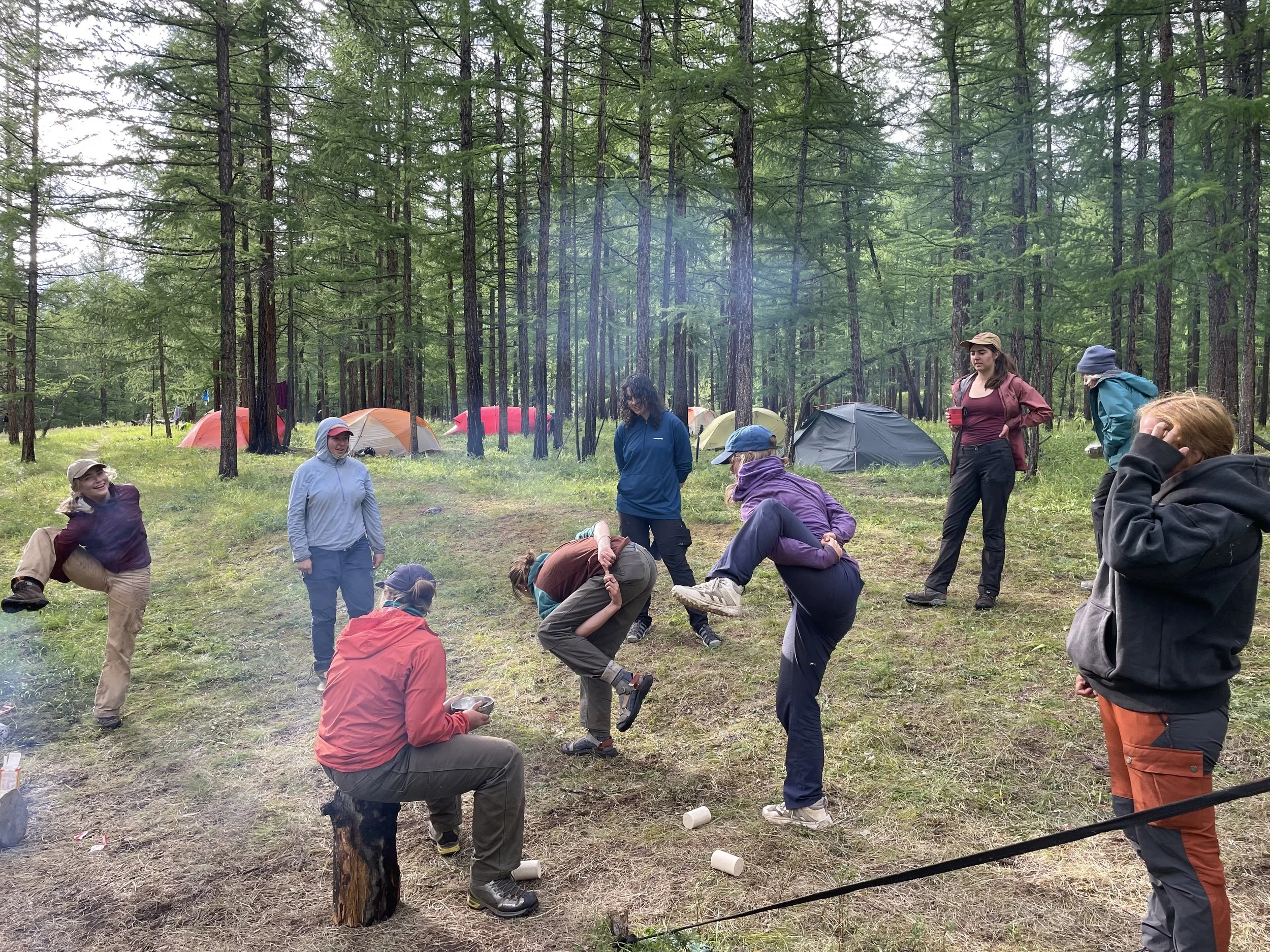
Shenanigans continue around the campfire. Photo Credit: Matt Gardiner.
When our time at Shar Uul came to a close, more rangers returned with horses to guide us out of the backcountry. I saw an opportunity, so I asked Batsukh—head of the horse train—to play cards with us when we stopped for the night. After dinner, I sat down by the riverbank with some of my Session 2 friends, unsure if the message had gotten through. But right before Erin was about to deal out a game of B.S., Batsukh brought out his pink-, green-, and yellow-striped card mat and dealt a game of poker. At first it was just Batsukh and us girls, but soon our circle grew, and we played into the evening.
After poker finished, I realized another card circle had formed behind us. More rangers were learning how to play another card game with Phoebe, Matt, Balja, and Dheem. Our circles merged, and suddenly most of our NOMAD team was in one giant circle, cards flying everywhere amidst the game and the laughter. The game was hardly functional, but that didn’t matter. We were in community, without the fear of a language barrier. By the end of the night, my mission to get to know every ranger was complete.
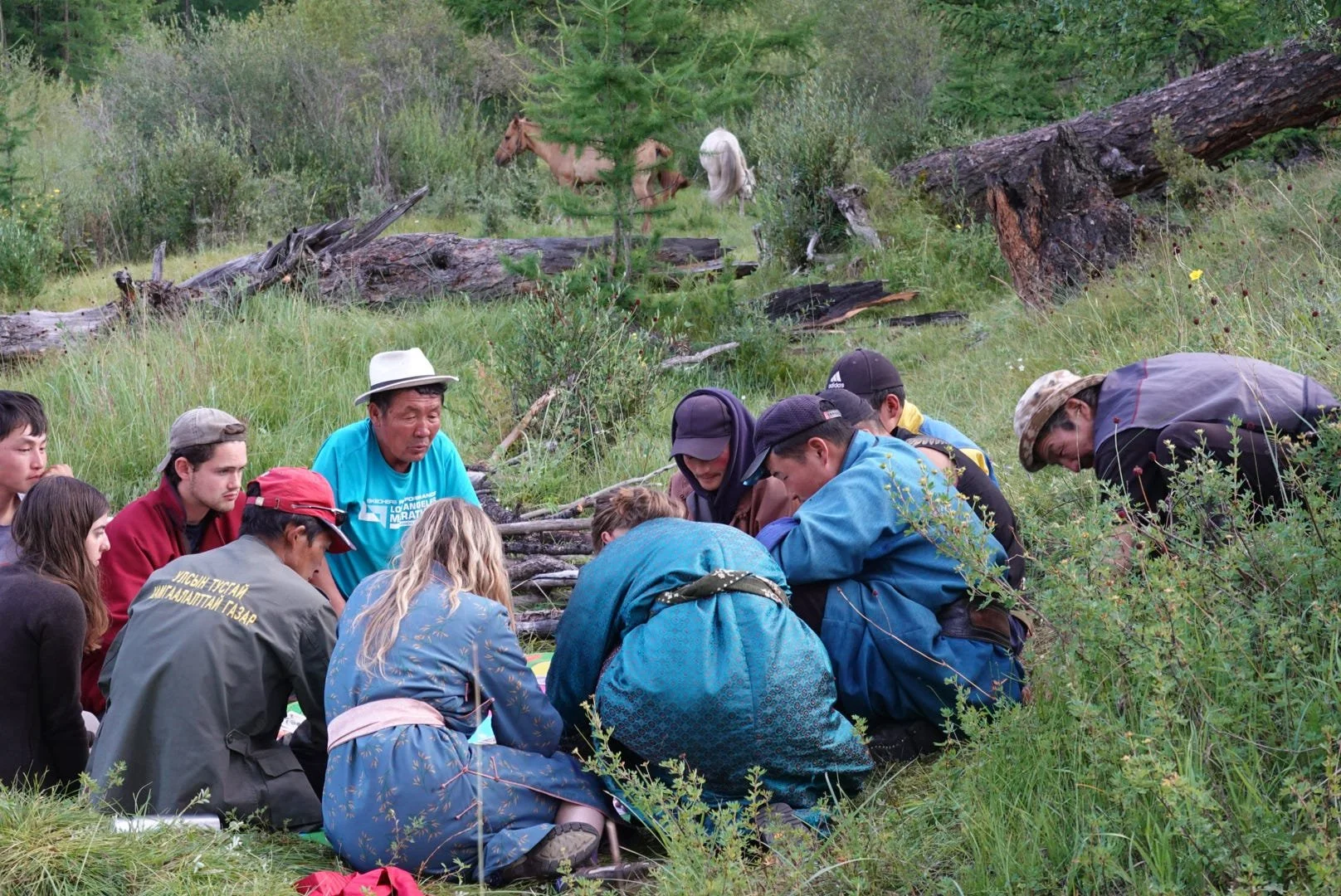
Campbell deals a final card game on the banks of the Khug. Photo Credit: Phoebe Veitch.
Community can be formed in the most unlikely places, between the most unlikely people. The fact that a girl from Nebraska can form meaningful friendships with Mongolian rangers, without a language in common, is a truly beautiful thing.
The night before we left Shar Uul, Battogtokh told us students that he hoped we remembered him. I don’t think I could ever forget my time with the rangers if I tried. Life is truly beautiful when you remember to put down your phone and smile at a new friend. My advice to next year’s NOMAD students? Make sure to pack that spare deck of cards. You never know who you might meet.