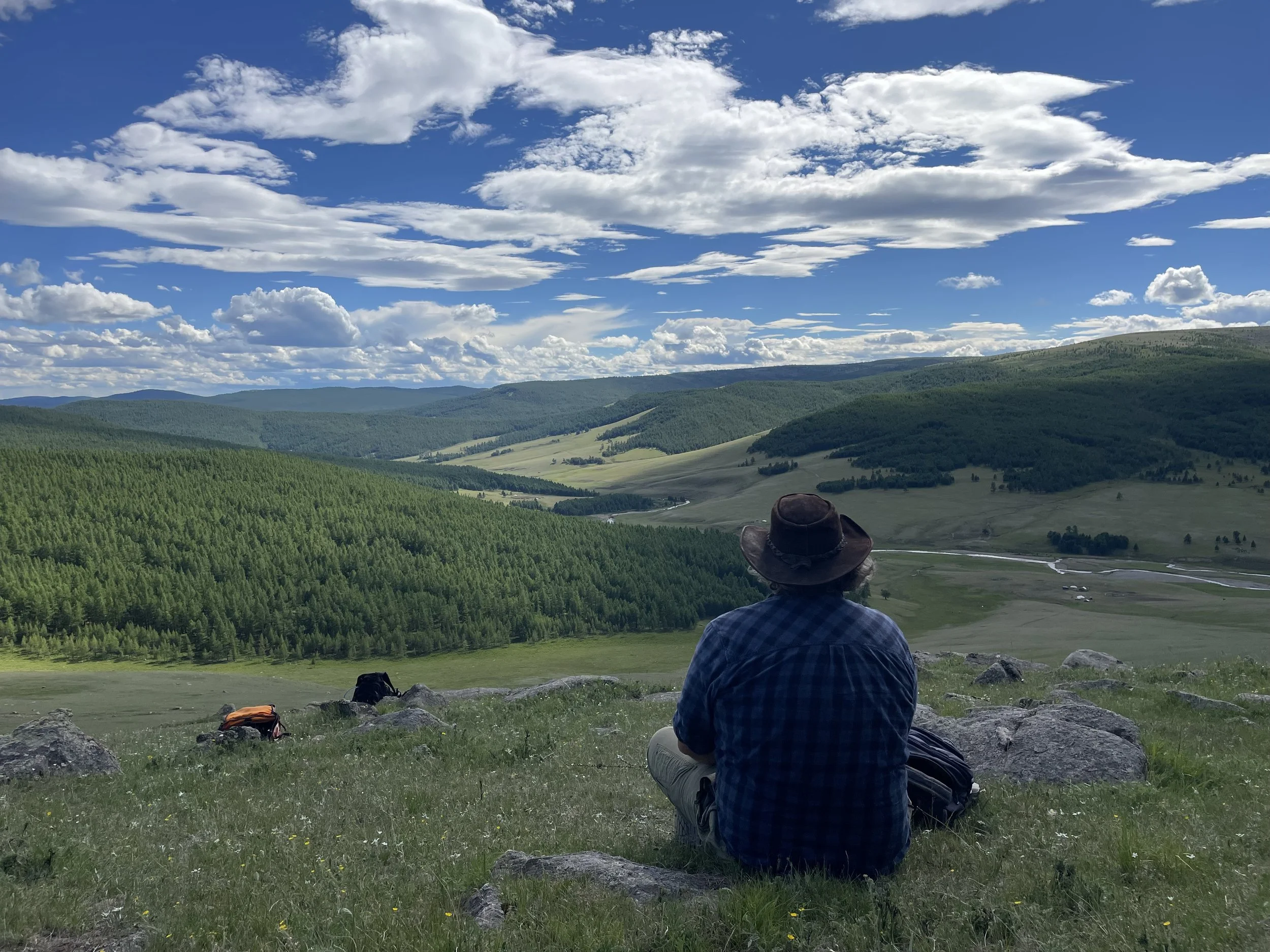
NOMAD collaborator Pete Hommel enjoys the view during a survey break. Photo Credit: Matt Gardiner
Maddi Mosher
July 6, 2026
The sites NOMAD works on are remote, and few have been identified by archaeologists before. As a result, NOMAD does not just excavate known sites, but sends teams combing through the surrounding hills on foot, looking for new sites—what archaeologists call “survey.”
We return to some of the sites we find on survey that season, or in future years, to excavate. But Mongolia holds thousands of graves, looted and unlooted. There are simply too many sites for us to excavate. So the team must triage, prioritizing rich concentrations of looted burials with artifacts exposed to the elements, and thus degrading rapidly. On ridges we know we will not be able to return to, we collect delicate, exposed artifacts during survey, so our expert conservator R. Erdenetsetseg can protect them.
For the most part, this strategy works well. But sometimes, there is a borderline case—when we are not sure if we will return to excavate, so we leave behind threatened artifacts, but later decide we need to devote our resources elsewhere.
One of the first mountains surveyed this year—nicknamed “Wildflower Peak” for its gorgeous alpine meadows—fell into this category. Our survey team had noted several looted Bronze Age burials near the ridge, with degrading human bones scattered down the slope. Hoping to return, they had not collected anything. Weeks later, however, it was clear that our excavation teams—busy at two local mountains, Nariin Goliin Gozgor and Khankhmait—would not have time to make it out. But the exposed bones would only keep degrading over the course of the next year.
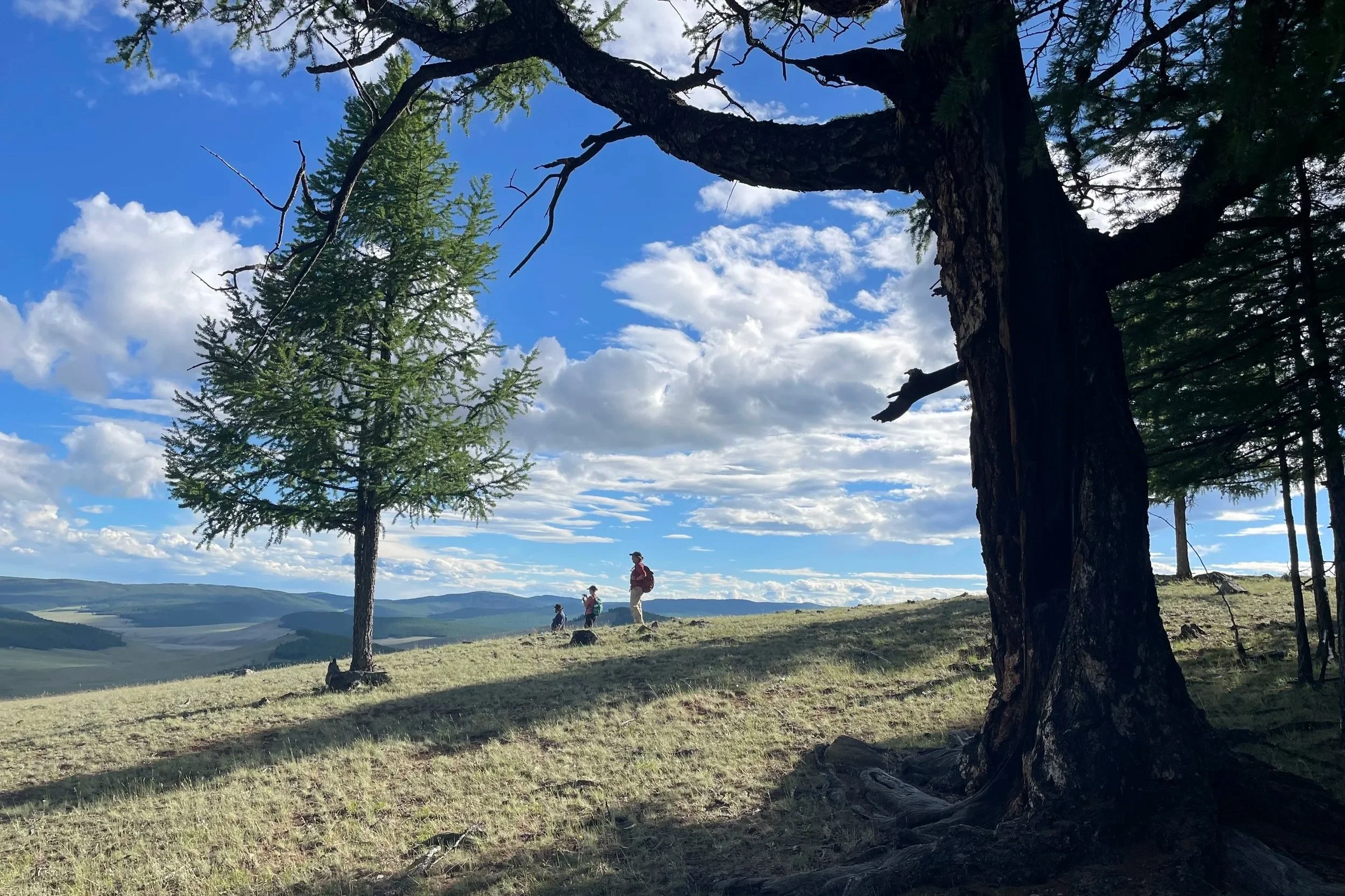
The NOMAD Science team out on survey. Photo Credit: Matt Gardiner.
To salvage the bones, Dr. Clark armed me and another student, Matt, with coordinates, and sent us up the mountain. Laden with plastic bags, Sharpies, gloves, scale, Garmin, and camera we set off to record and collect the history left on the surface by the looters. The vistas were beautiful and there were many fragrant wildflowers. It was a beautiful place to work.
Matt and I hiked to the top of the ridge and spotted the looted grave. There were a few obvious bones exposed to the sun and harsh weather of Mongolia. We recorded these bones and collected them in Ziplocs, noting the site, date, and other information on the bag so that the lab could know where they had come from. With hours left before lunch, we continued searching the surrounding area for anything else the looters had left or discarded. The cultural and historical significance of these graves depended on what could be discovered from what the looters had left. We searched the ground, in between rocks, and down the slope.
Between a few large stones, ejected from the central mound by looters, we found a few bone fragments, and decided to keep looking deeper between the rocks. Our gloved hands carefully sifted through the debris. All of the sudden there was a round bead! It looked like it was made from clay with a perfect hole through the middle.
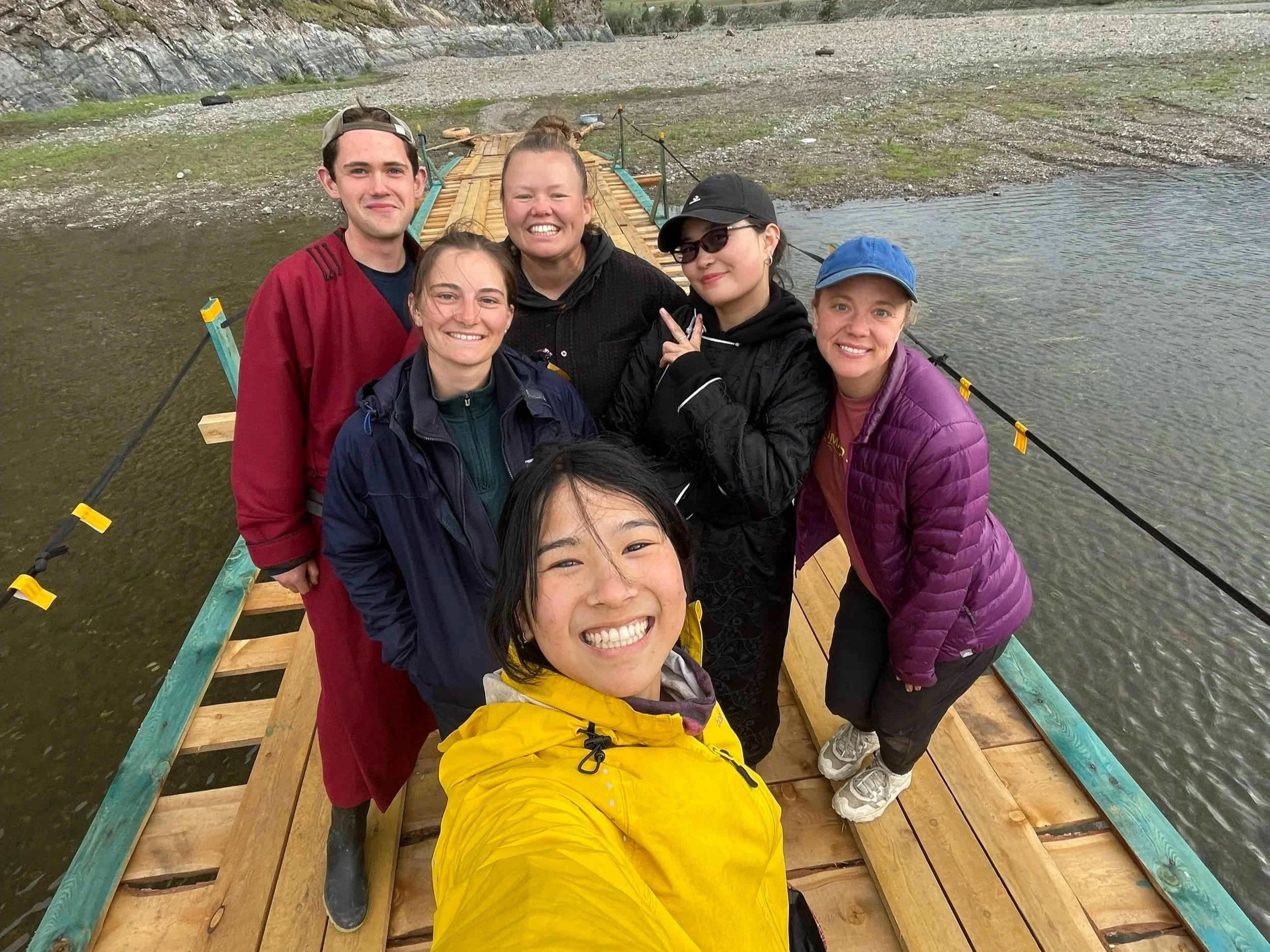
Matt and Maddi (back left, middle) exploring nearby Bayanzurkh with other NOMAD team members a few days later. Photo Credit: Sarah Wolfe.
We looked excitedly at the bead. Matt, holding the bead, was unsure what he was seeing—but the excitement of finding such a treasure overtook the both of them. With yells of glee, I asked to hold the bead to look at it closer. The excitement of holding a relic of the past excited me past the point of sense. He passed it to my hand, and I peered closely. The momentary excitement of the discovery suddenly died. “This,” I said, “is poop!” And I chucked the poop bead down the hill.
Amidst our laughter, Matt and I had enough shame to feel a sense of chagrin. But it didn’t last long. The morning’s search kept yielding fragments of bone, both human and animal, and even a tooth—all at least 3,000 years old. The tooth was a particularly exciting find—loaded with dense concentrations of DNA, it could help us understand not just its owner’s descent, but the timing and direction of migration and population history across Bronze Age Central Asia. In Mongolia, you never know what you will find—poop or otherwise. But you always find something out.